Introduction
Blackheads and whiteheads are two of the most common types of acne. Although they may look similar at first glance, they develop differently and often require slightly different care.
Knowing the difference can help you choose the right skincare routine and avoid habits that may worsen breakouts.
What Are Blackheads?
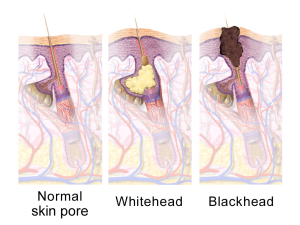
Blackheads, also called open comedones, develop when a pore becomes clogged with excess oil, dead skin cells, and debris. Because the pore remains open, the material inside is exposed to air and turns dark through oxidation. The dark color is not dirt.
Blackheads are most commonly found on the:
- Nose
- Chin
- Forehead
- Chest
- Back
Open Pore Diagram
What Are Whiteheads?
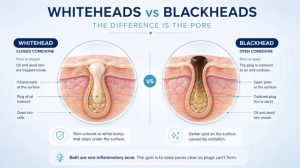
Whiteheads, also known as closed comedones, occur when a pore becomes blocked but remains closed. Because the trapped material is not exposed to air, it stays white or flesh-colored.
Whiteheads often appear on the:
- Cheeks
- Forehead
- Chin
- Jawline
Closed Pore Diagram
Blackheads vs. Whiteheads
| Blackheads | Whiteheads |
|---|---|
| Open pore | Closed pore |
| Dark surface | White or skin-colored surface |
| Oxidation causes dark appearance | No oxidation |
| Easier to extract professionally | Should not be squeezed at home |
| Common on oily areas like the nose | Often appear on cheeks and forehead |
Why Do They Form?
Several factors can contribute to both blackheads and whiteheads, including:
- Excess oil production
- Dead skin buildup
- Hormonal changes
- Certain cosmetics
- Genetics
- Inconsistent skincare habits
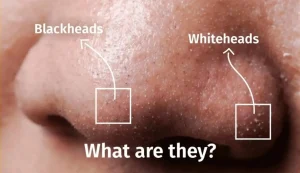
Comparing Acne Types
How to Treat Blackheads
Helpful habits include:
- Wash your face twice daily with a gentle cleanser.
- Use products labeled non-comedogenic.
- Consider ingredients such as salicylic acid, if appropriate for your skin.
- Avoid harsh scrubbing.
- Don’t squeeze blackheads yourself, as this can irritate the skin.
How to Treat Whiteheads
To help manage whiteheads:
- Cleanse gently every morning and evening.
- Avoid heavy, pore-clogging skincare products.
- Be patient—consistent skincare often works better than aggressive treatments.
- If breakouts are persistent or severe, consult a dermatologist.
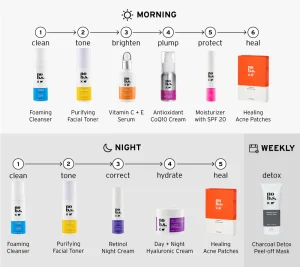
Daily Skincare Routine
Common Mistakes to Avoid
Many people accidentally make acne worse by:
- Picking or squeezing blemishes
- Washing the face too frequently
- Using products that are too harsh
- Skipping moisturizer altogether
- Sleeping with makeup on
Gentle, consistent care is usually more effective than aggressive treatments.
Frequently Asked Questions
Are blackheads caused by dirt?
No. Blackheads appear dark because the material inside the pore oxidizes when exposed to air, not because of dirt.
Which is easier to remove?
Professional extraction is generally safer than trying to remove either type at home. Avoid picking or squeezing them yourself.
Can blackheads become pimples?
Yes. If a clogged pore becomes inflamed or infected, it may develop into an inflamed acne lesion.
Conclusion
Blackheads and whiteheads are both forms of acne, but they differ in how the pore is blocked. Understanding these differences can help you choose appropriate skincare products and develop healthy habits that support clearer skin over time.