Introduction
Pimples can appear at the most inconvenient times. You may wake up with a new breakout before an important event, notice several small bumps after changing skincare products, or experience recurring acne even when you try to keep your skin clean.
The good news is that there are practical ways to reduce the frequency and severity of breakouts. However, preventing pimples does not mean aggressively scrubbing your skin, washing your face repeatedly, or trying to remove every pore blockage.
In fact, some popular acne habits can irritate the skin and make the situation worse.
A better approach is to understand why pimples develop and build a simple, consistent skincare routine around your skin’s needs.
This guide explains how to prevent pimples, which daily habits can help, common mistakes to avoid, and when professional advice may be appropriate.
Why Do Pimples Develop?
Before discussing prevention, it helps to understand what happens inside a pore.
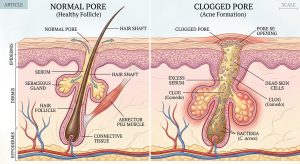
Each hair follicle contains a sebaceous gland that produces an oily substance called sebum. Sebum helps protect and moisturize the skin.
Problems can occur when a follicle becomes clogged with a combination of:
- Excess sebum
- Dead skin cells
- Other debris
- Bacteria associated with acne
- Inflammation
A clogged pore may develop into a blackhead or whitehead. If inflammation develops, it can become a red or swollen acne lesion.
Several factors can influence this process, including hormones, genetics, skin type, certain medications, and skincare or cosmetic products.
This is why simply “washing your face more” isn’t always the answer.
HOW A CLOGGED PORE FORMS
1. Clean Your Skin Gently
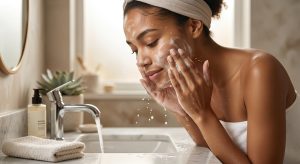
One of the simplest ways to support healthy skin is to cleanse it regularly without being overly aggressive.
A gentle cleanser can help remove:
- Excess oil
- Sweat
- Dirt and environmental debris
- Makeup
- Sunscreen residue
For many people, cleansing in the morning and before bed is sufficient.
However, everyone’s skin is different. If your skin becomes dry, tight, burning, or irritated after cleansing, your routine may be too harsh.
Avoid aggressive scrubbing
Scrubbing harder does not necessarily remove acne more effectively.
Rough exfoliating tools and aggressive scrubbing can irritate the skin’s surface. Irritation may make existing breakouts look worse and make it harder for your skin to tolerate other skincare products.
Instead, use your fingertips and gently cleanse the skin.
2. Don’t Pick or Squeeze Pimples
This is one of the most important habits to change if you frequently touch your face.
When you squeeze a pimple, you can irritate the surrounding skin and potentially push material deeper into the follicle. Picking can also introduce additional bacteria and increase inflammation.
Another problem is that repeated picking can damage the skin and increase the risk of marks or scars.
If a pimple is bothering you, consider leaving it alone and using an appropriate acne treatment instead.
For persistent or severe acne, professional treatment is a better option than repeatedly trying to extract lesions yourself.
HEALTHY SKINCARE HABIT
3. Choose Non-Comedogenic Products
Some skincare and cosmetic products may contribute to clogged pores in certain people.
When shopping for skincare or makeup, look for products labeled non-comedogenic.
This term generally means the product is formulated to be less likely to clog pores.
You may see it on:
- Moisturizers
- Sunscreens
- Foundations
- Makeup
- Facial cleansers
However, a product labeled non-comedogenic isn’t a guarantee that everyone will react to it in exactly the same way.
If a new product consistently seems to cause irritation or breakouts, consider stopping it and seeing whether your skin improves.
4. Keep Your Hair and Hair Products Away From Your Face
Hair naturally contains oil, and some hair products contain ingredients that may irritate or clog pores for certain people.
If you regularly experience breakouts around your forehead or hairline, consider whether your hair products could be contributing.
Helpful habits include:
- Washing your hair regularly.
- Keeping oily hair away from your face when possible.
- Avoiding excessive use of heavy styling products around the hairline.
- Washing your face after significant sweating.
This doesn’t mean hair products are automatically responsible for acne. Instead, it’s worth paying attention to patterns.
5. Change Pillowcases Regularly
Your pillowcase comes into contact with your face for hours while you sleep.
Over time, it can accumulate:
- Oil
- Sweat
- Skincare products
- Hair products
- Dead skin cells
Changing pillowcases regularly can help keep your sleeping environment cleaner.
It is not a guaranteed acne treatment, but it is a simple hygiene habit that may be useful, particularly if you sweat heavily at night or use several hair and skincare products.
6. Clean Items That Touch Your Face
Your pillow isn’t the only object that touches your skin.
Think about how often your face comes into contact with:
- Mobile phones
- Headphones
- Helmets
- Hats
- Makeup brushes
- Towels
- Hands
These objects can accumulate oil, sweat, cosmetics, and other debris.
Cleaning frequently used items according to their manufacturer’s instructions and avoiding unnecessary face-touching can be a useful part of an overall skincare routine.
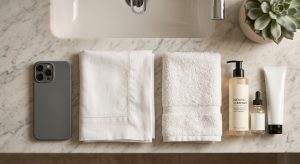
EVERYDAY ITEMS
7. Remove Makeup Before Going to Bed
Sleeping with makeup on can leave cosmetic products on the skin for many hours.
If you wear makeup, make removing it before bedtime part of your regular routine.
A simple evening routine could be:
- Remove makeup.
- Gently cleanse your face.
- Apply appropriate skincare products.
- Use moisturizer if needed.
You don’t need a complicated 10-step routine to maintain healthy skin.
Consistency is often more useful than constantly changing products.
8. Don’t Overwash Your Face
If you have oily skin, you may feel tempted to wash your face repeatedly throughout the day.
However, more cleansing isn’t automatically better.
Excessive washing can leave the skin dry and irritated. Some people may then respond by applying heavier products or touching their skin more frequently.
Instead of trying to remove every trace of oil, aim for a balanced routine.
If you exercise or sweat heavily, gently cleansing afterward may be appropriate.
9. Be Careful With Exfoliation
Exfoliation can help remove dead skin cells, but using strong exfoliating products too frequently can irritate your skin.
There are different types of exfoliation, including chemical exfoliants and physical exfoliants.
Some acne products contain ingredients such as salicylic acid that can help unclog pores.
However, stronger does not necessarily mean better.
If you are introducing an active ingredient into your routine, follow the product directions and give your skin time to adjust.
If you experience significant irritation, stop using the product and consider asking a healthcare professional for advice.
10. Use Sunscreen During the Day
Sun protection is an important part of general skin health.
Choose a sunscreen that works comfortably with your skin and, if you are prone to clogged pores, consider a non-comedogenic option.
Sunscreen is particularly useful because some acne treatments can make the skin more sensitive to sunlight.
Look for broad-spectrum sunscreen and follow the product’s instructions for application and reapplication.
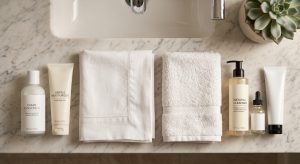
SUNSCREEN AND SKINCARE
11. Pay Attention to Your Diet Without Following Extreme Rules
People often ask whether certain foods cause pimples.
The answer is more complicated than simply saying that one food causes acne.
Research has explored possible relationships between acne and dietary patterns, including foods with a high glycemic load and some dairy products. However, individual responses can vary, and diet is only one factor among many.
Rather than eliminating large numbers of foods unnecessarily, focus on an overall balanced diet.
Avoid extreme diets or restrictive eating patterns simply because you are worried about acne.
If you suspect a particular food consistently affects your skin, discussing the situation with a qualified healthcare professional can be more useful than making major dietary changes on your own.
12. Manage Stress and Get Enough Sleep
Stress does not mean that someone is responsible for their own acne.
However, stress can influence the body in several ways, and some people notice that their acne becomes worse during stressful periods.
Stress can also affect everyday habits.
For example, someone who is stressed may:
- Sleep less
- Touch their face more
- Skip their skincare routine
- Eat differently
- Forget to remove makeup
Getting enough sleep, maintaining a regular routine, and finding healthy ways to manage stress can support overall well-being.
13. Don’t Constantly Change Your Skincare Products
One of the biggest mistakes people make is changing products too quickly.
You might try a cleanser for several days, decide that it isn’t working, and immediately switch to another one.
Then you add another serum, another exfoliant, and another acne treatment.
Eventually, it becomes difficult to know what is actually helping or irritating your skin.
Instead, introduce changes gradually.
Give a product an appropriate amount of time to work according to its instructions, unless it causes significant irritation or an adverse reaction.
SIMPLE SKINCARE ROUTINE
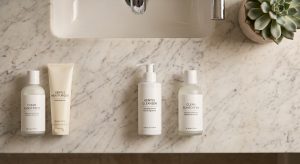
A Simple Daily Routine for Acne-Prone Skin
You don’t need dozens of products.
Morning
Step 1: Gentle cleanser
Clean your face without aggressive scrubbing.
Step 2: Treatment product if appropriate
If you use an acne treatment, follow its instructions carefully.
Step 3: Moisturizer
Use a moisturizer that feels comfortable for your skin.
Step 4: Sunscreen
Apply broad-spectrum sunscreen during the day.
Evening
Step 1: Remove makeup and sunscreen.
Step 2: Gently cleanse your face.
Step 3: Apply your chosen acne treatment if appropriate.
Step 4: Moisturize.
The best routine is one you can follow consistently.
What About Pimple-Popping?
Pimple-popping videos are popular online because people find the process visually satisfying and interesting.
However, watching a professional extraction is very different from trying to perform an extraction yourself.
If a lesion requires extraction, a qualified professional can assess the skin and determine whether extraction is appropriate.
Trying to repeatedly squeeze or dig at pimples yourself can cause irritation and increase the chance of skin damage.
For your own skin, prevention and appropriate treatment are safer priorities than attempting to remove every visible blemish.
Common Acne Prevention Mistakes
Mistake 1: Scrubbing Too Hard
Aggressive scrubbing can irritate your skin.
Mistake 2: Washing Too Often
More washing does not automatically mean fewer pimples.
Mistake 3: Using Too Many Products
Combining many active ingredients can make it difficult to identify what is causing irritation.
Mistake 4: Picking at Your Skin
Repeated picking can damage the skin and increase the risk of marks and scars.
Mistake 5: Expecting Overnight Results
Acne usually doesn’t disappear after one night.
Good skincare requires consistency and patience.
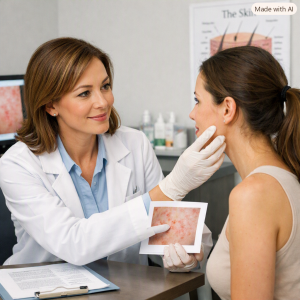
When Should You See a Dermatologist?
Some acne can be managed with over-the-counter products and good skincare habits. However, professional advice may be appropriate if:
- Acne is severe or painful.
- Breakouts are persistent.
- Acne is leaving scars or significant marks.
- Over-the-counter treatments aren’t helping.
- Acne is affecting your confidence or everyday life.
- You aren’t sure what type of skin condition you have.
A dermatologist can determine what is causing the problem and recommend appropriate treatment.
DERMATOLOGIST CONSULTATION
Frequently Asked Questions
How can I prevent pimples naturally?
Gentle cleansing, avoiding unnecessary face-touching, choosing suitable skincare products, removing makeup before bed, and maintaining healthy daily habits can all support clearer skin.
There is no guaranteed natural method that prevents every pimple.
How many times should I wash my face?
For many people, cleansing twice a day is reasonable, although individual needs vary. If your skin becomes dry or irritated, your routine may need adjustment.
Does drinking more water prevent pimples?
Staying hydrated is important for general health, but simply drinking extra water is not a guaranteed acne treatment.
Should I moisturize if I have oily skin?
Yes. Oily skin can still benefit from moisturizer. Look for a lightweight product that feels comfortable and is labeled non-comedogenic if clogged pores are a concern.
Does touching my face cause acne?
Touching your face isn’t the sole cause of acne, but frequent touching can transfer oil, dirt, and other substances to the skin and may contribute to irritation.
Can teenagers prevent acne completely?
Unfortunately, there is no guaranteed way to prevent all acne during puberty. Hormonal changes can strongly influence oil production and breakouts.
However, a gentle and consistent skincare routine can help manage the skin.
How long does it take for acne to improve?
The timeline varies depending on the type and severity of acne and the treatment being used. Some products may take several weeks before noticeable improvement occurs.
If acne isn’t improving or is becoming worse, professional advice may help.
Final Thoughts
Learning how to prevent pimples isn’t about having perfectly clear skin every day.
The goal is to develop habits that support healthy skin while avoiding unnecessary irritation.
A simple routine can go a long way:
- Cleanse gently.
- Avoid picking and squeezing.
- Choose suitable skincare products.
- Remove makeup before sleeping.
- Protect your skin from the sun.
- Keep items that touch your face clean.
- Introduce new products gradually.
- Be patient with your routine.
- Seek professional advice when acne becomes severe or persistent.
Most importantly, don’t feel that every breakout is your fault. Acne can result from many factors, including hormones and genetics, that aren’t completely under your control.
Good skincare is about consistency, not perfection.